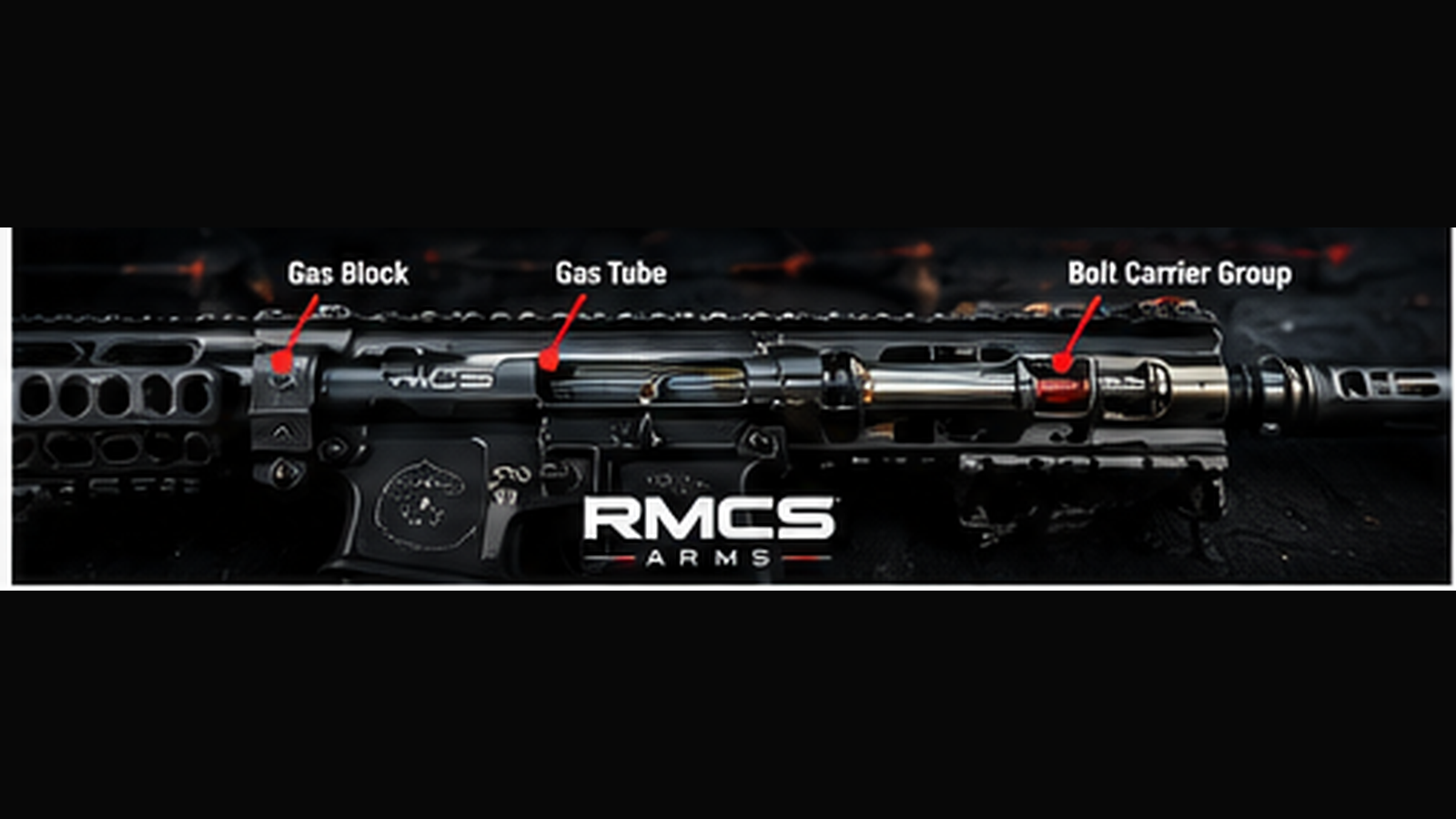
Safety note: Before inspecting or maintaining any firearm, verify it is unloaded, remove ammunition from the work area, follow the manufacturer’s instructions, and use a qualified gunsmith when a condition is outside your training or tools. The AR-pattern rifle is often described as a “direct-impingement” design. In everyday use, the important idea is simple: propellant gas is routed from the barrel through the gas block and gas tube to the carrier key, where it acts within the bolt-carrier system and drives the operating cycle. Understanding that path makes many common reliability symptoms easier to diagnose without immediately replacing parts.
The gas path in plain language After a round is fired, gas pressure develops behind the bullet. When the bullet passes the barrel’s gas port, a portion of that gas enters the gas block, moves through the gas tube, and reaches the carrier key. The carrier then moves rearward, allowing the action to unlock, extract and eject the fired case, compress the action spring, and then return forward to chamber the next round.
This means reliability depends on the complete system working together: the gas port and gas block, gas tube, carrier key, bolt and carrier, ammunition, chamber condition, lubrication, magazine function, and the buffer/action-spring system. A malfunction that looks “gas related” is not always caused by the gas system.
Common symptoms and what they can mean Short-stroking or failure to lock back If the carrier does not travel far enough rearward, the rifle may fail to eject, fail to pick up the next round, or fail to lock open on an empty magazine. Possible causes include insufficient gas delivery, a gas leak, friction from a dirty or dry action, ammunition that does not produce enough impulse for the configuration, magazine-related problems, or an action-spring/buffer combination that does not suit the system.
A good diagnostic sequence starts with the simple items: known-good ammunition, a known-good magazine, correct lubrication, obvious fouling, and visible damage. If the problem remains, inspection of gas-block alignment, gas-tube condition, carrier-key tightness/staking, and signs of gas leakage is appropriate. Brownells specifically notes that a loose carrier key can leak gas and cause cycling problems.
Excessively energetic cycling A rifle that cycles very aggressively can feel harsh, eject cases farther than expected, or show accelerated wear. Suppressor use can increase back pressure on many conventional AR configurations, so a rifle that runs normally unsuppressed may behave differently when a suppressor is attached.
The correct response is not to begin changing parts at random. Establish a baseline first: ammunition, magazine, lubrication, suppressor on/off, and the exact malfunction. If the rifle is equipped with manufacturer-approved adjustable components, follow that manufacturer’s instructions. Otherwise, have a competent gunsmith inspect the configuration.
Suppressed versus unsuppressed operation A suppressor changes the pressure environment at the muzzle and can alter how long pressure remains in the bore. Depending on barrel length, gas-system length, port size, ammunition and suppressor design, that may increase carrier velocity and gas delivered to the action. The result can be more fouling and a different recoil/ejection feel.
The goal of a dependable setup is not “maximum gas.” It is enough operating energy to function reliably across the intended ammunition and conditions without creating unnecessary carrier speed. Because every configuration differs, there is no universal setting that is correct for all rifles.
A practical troubleshooting checklist Confirm the firearm is unloaded before inspection. Use a known-good magazine and appropriate factory ammunition. Verify the action is properly lubricated according to the manufacturer. Inspect for unusual fouling, damaged parts, loose fasteners, or obvious gas leakage. Compare behavior suppressed and unsuppressed if that is part of the intended use. Document the exact symptom instead of changing several variables at once. Escalate persistent cycling problems to a qualified gunsmith rather than guessing. Why systematic diagnosis matters Changing multiple parts at once can hide the original cause and create a second problem. A better approach is controlled testing: change one variable, record the result, and keep safety and manufacturer guidance at the center of the process. That approach saves time and protects the reliability of the rifle.
RMCS Arms — Built Better. Explore more RMCS educational content, finished-project photography, services, and company updates at RMCSArms.com. References Brownells — AR-15 gas key technical tip Brownells — AR-15 quick assessment