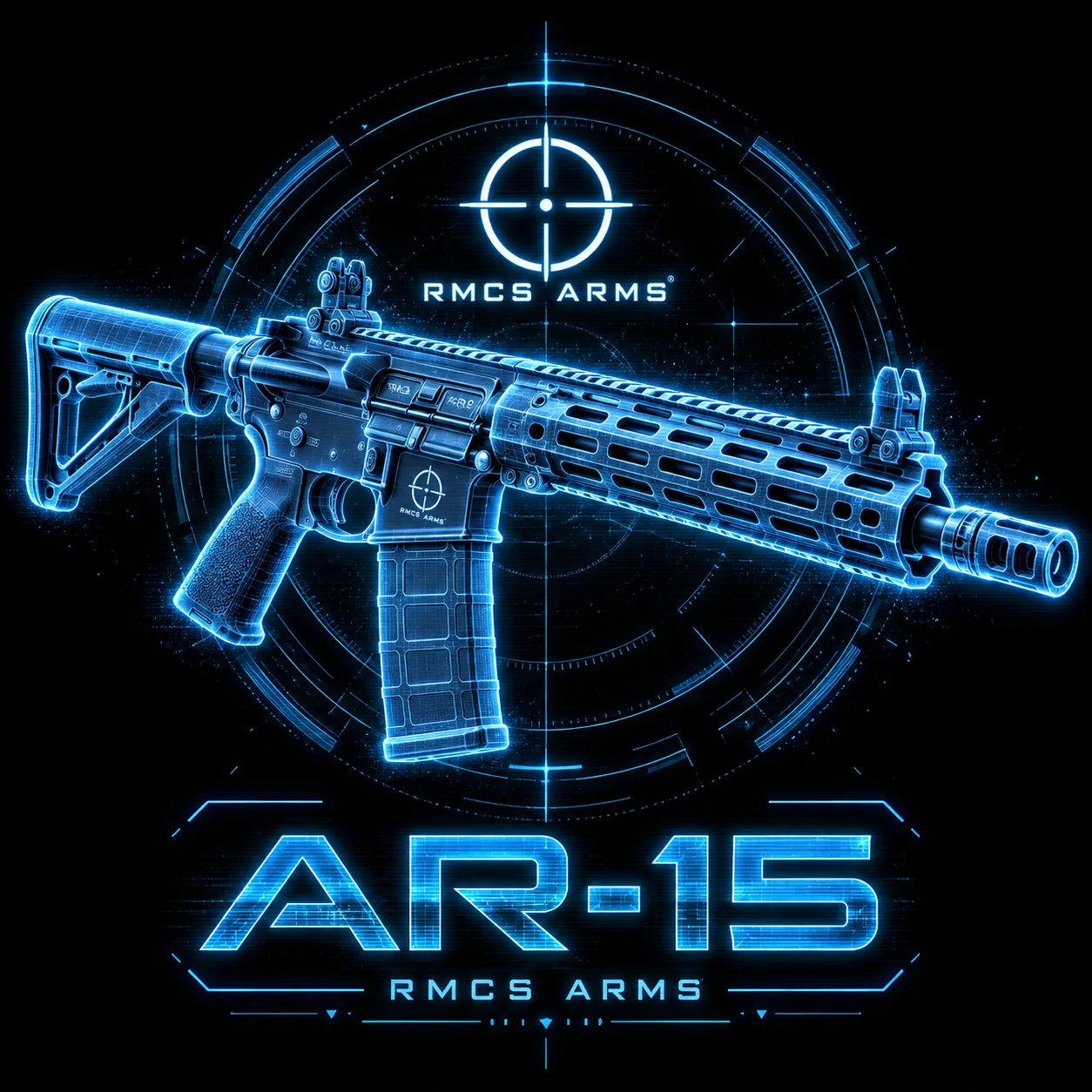
If you are new to the AR-15 platform, a stripped-down rifle can look like a pile of unrelated parts. The easiest way to understand it is to stop thinking about every pin and spring and look at the rifle as a few major systems that work together.
At a high level, an AR-15 is built around two main halves: the lower receiver and the upper receiver. The lower is the control center. The upper is the working section that contains the barrel and the parts that cycle when the rifle operates.
This guide explains those major assemblies in normal, everyday language so you can understand what you are looking at, what each part does, and how the complete rifle fits together.
1. Start With the Two Main Halves
The easiest mental picture is this:
- Lower receiver = controls and support.
- Upper receiver = barrel and operating system.
The two assemblies connect to make the complete rifle. That modular layout is one of the reasons the AR-15 platform is so easy to understand once you stop looking at it as dozens of separate pieces.
The lower contains the grip, trigger controls, safety, magazine interface, and stock system. The upper contains the barrel, handguard, bolt carrier group, charging handle, and gas system.
2. The Lower Receiver Is the Control Center
Think of the lower receiver as the part of the rifle that the shooter interacts with most directly.
It contains the controls that let the shooter hold, load, safe, and operate the firearm. The pistol grip and stock are attached to this side of the rifle, and the magazine feeds ammunition up into the action from below.
Inside the lower are the fire-control components. These are safety-critical parts, so any work involving the trigger, selector, or internal control system should be inspected carefully and handled by someone who understands the platform.
In plain English: the lower is where your hands, controls, magazine, trigger system, and stock all come together.
3. The Upper Receiver Is the Working Half
The upper receiver is the main structure for the rifle's barrel and operating parts.
The barrel extends forward from the upper. The handguard surrounds the barrel area and gives the shooter a safe gripping surface while also providing mounting locations for accessories.
Inside the upper is the bolt carrier group, commonly called the BCG. The charging handle is also located in the upper and gives the shooter a way to manually operate the action.
In everyday terms, the upper is where most of the mechanical work happens.
4. The Barrel Gives the Rifle Its Direction
The barrel provides the path the projectile travels through when the firearm is discharged.
Barrels come in different lengths, profiles, materials, chamberings, and twist rates. Those choices affect weight, balance, intended use, and shooting characteristics.
The barrel is also one of the places where professional fit and inspection matter most. Chamber condition, headspace, alignment, and barrel installation are safety-critical areas and are not something to guess about.
A simple way to remember it is: the upper holds the barrel, and the barrel is the heart of the rifle's firing path.
5. The Handguard Is the Protective Outer Structure
The handguard sits around the barrel area and gives the shooter somewhere to support the front of the rifle.
Modern AR-15 handguards often use M-LOK slots and a top rail so accessories can be mounted without covering the rifle in unnecessary hardware.
A good handguard should feel solid, stay aligned, and provide enough clearance around the barrel and gas system.
Think of it as the outer shell around the front working area of the rifle.
6. The Bolt Carrier Group Does the Moving Work
The bolt carrier group is one of the most important moving assemblies in the rifle.
When the rifle cycles, the BCG moves inside the upper receiver. It works with the chamber, magazine, gas system, and recoil system to handle the operating cycle of the firearm.
You do not have to memorize every small component to understand the concept. The easiest description is: the BCG is the main moving mechanical assembly inside the upper receiver.
Routine maintenance normally includes keeping it properly cleaned, lubricated, and inspected for unusual wear or damage.
7. The Charging Handle Is the Manual Control for the Action
The charging handle gives the shooter a manual way to move the action.
It sits at the rear of the upper receiver and interfaces with the bolt carrier group. Different styles are available, including standard and ambidextrous designs.
In plain English: the BCG does the moving work during operation, while the charging handle lets you operate that system manually.
8. The Gas System Helps the Rifle Cycle
Most AR-15 rifles use a gas-operated system.
When the rifle is fired, the gas system uses part of the pressure produced by the shot to help cycle the action. The system includes the barrel's gas interface, gas block, gas tube, and the corresponding parts in the bolt carrier group.
That is why barrel length, gas-system configuration, ammunition, buffer setup, and suppressor use can affect how a rifle behaves.
For a new owner, the important takeaway is simply: the gas system provides the energy that helps the rifle cycle automatically.
9. The Stock and Buffer System Work From the Rear
At the back of the lower receiver is the stock system and the internal recoil assembly.
This rear system helps manage movement of the action and contributes to how the rifle cycles and feels during operation.
Different configurations may use different stocks, springs, and buffers depending on the rifle and its intended use.
If the upper is where the action moves, think of the rear system as the part that helps control and return that movement.
10. The Muzzle Device Finishes the Front End
At the front of the barrel is the muzzle area. Depending on the rifle, this may use a flash hider, brake, compensator, thread protector, or a compatible suppressor-mounting device.
Each type serves a different purpose, and compatibility matters. Anything involving suppressor mounting or muzzle alignment should be checked carefully before use.
11. Optics and Accessories Finish the Setup
Once the rifle's major operating systems are complete, the owner can choose sights and accessories based on how the rifle will actually be used.
That may include a red dot, scope, backup sights, sling, light, bipod, or other accessories.
The best setup is not the one with the most parts. It is the one where every component has a reason to be there.
12. How Everything Works Together
A simple way to remember the whole platform is:
- Lower receiver: controls, trigger system, magazine interface, grip, and stock.
- Upper receiver: barrel and operating components.
- Barrel: directs the projectile.
- Bolt carrier group: main moving assembly.
- Charging handle: manually operates the action.
- Gas system: helps cycle the action.
- Handguard: protects the barrel area and provides a gripping and accessory surface.
- Buffer and stock system: supports and manages the action from the rear.
- Muzzle device: completes the muzzle-end configuration.
- Optic or sights: provides the aiming system.
That is the AR-15 in human terms. Once you understand those groups, the rifle stops looking complicated and starts looking like a series of systems designed to work together.
Professional Inspection Matters
A firearm can look correct and still have a problem that is not obvious from the outside. Barrel installation, headspace, fire-control components, gas-system setup, suppressor alignment, and other safety-critical areas deserve proper inspection before live firing.
If there is any uncertainty about how a firearm has been assembled, modified, repaired, or configured, have it checked by a qualified gunsmith before use.
Learn More With RMCS Arms
RMCS Arms works with AR-platform rifles, components, accessories, optics, handguards, muzzle devices, and custom configurations. If you are planning a rifle around a specific purpose, understanding the major systems first makes it much easier to choose the right components.
Explore available products in the RMCS Arms Shop or learn more about custom rifle options through the RMCS Arms Builder.
Knowledge, quality components, and professional inspection are the foundation of a dependable rifle.